
Anatomical Models
that feel real.
ALT produces high-fidelity, multi-material anatomical models in synthetic skin, bone, muscle, adipose, fascia, and blood vessels — with tissue-mimicking mechanical behavior for surgical training, pre-operative planning, medical device validation, and patient education.
A training model is only as useful as its fidelity to real anatomy. ALT pairs high-resolution multi-material printing with tissue-mimicking materials to produce models surgeons actually train on.
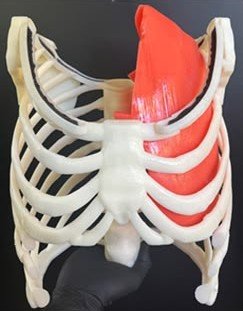
Ribs grown from a scan.
A ribcage printed directly from patient imaging — anatomically faithful bone geometry in ALT's synthetic bone material.
Anatomical models, teaching to surgery.
Anatomical models serve diverse purposes across medicine and related fields — bridging the gap between theory and practice.
Medical education
Hands-on anatomy and physiology learning for students — study structure, dissection, and procedural technique safely and repeatedly.
Surgical training
Surgeons practice complex procedures and refine skills on realistic, tissue-mimicking models before ever entering the OR.
Patient care & communication
Visual models help explain conditions and treatments, improving patient understanding and informed-consent discussions.
Research & device development
Researchers test new techniques, devices, and equipment against realistic anatomy — and developers validate medical products.
Forensics & medical-legal
Crime-scene reconstruction and courtroom demonstration — showing injuries or explaining procedures in legal proceedings.
Veterinary, imaging & prosthetics
Veterinary medicine, medical imaging, prosthetics, and orthotics all benefit from anatomically accurate physical models.
Fully functional multi-material models.
ALT has demonstrated fully functional multi-material anatomical models printed in synthetic skin, bone, muscle, adipose, fascia, and blood vessels. Our material properties simulate those of human tissue across the mechanical properties that matter most to training fidelity.
ALT has also demonstrated models with embedded conductive traces and integrated pressure sensors to improve realism and haptic feedback during training.
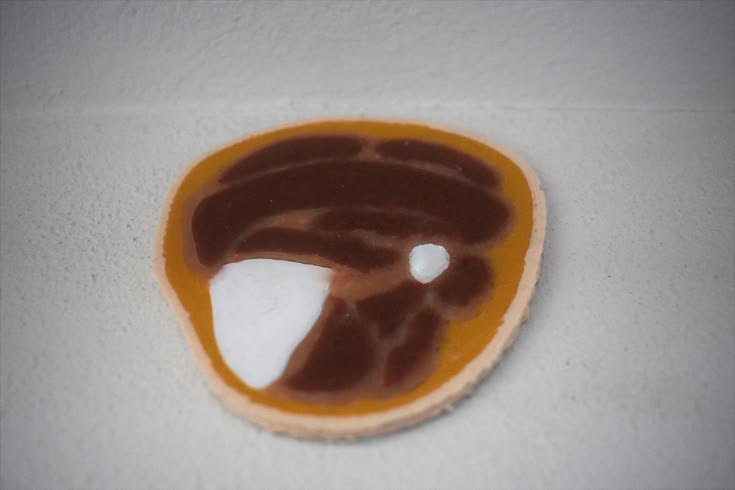
Every tissue in one cross-section.
Bone, skin, muscle, vessels, and fat printed together in a single leg cross-section — each layer mimicking its real mechanical response.
Realistic training without cadavers.
Synthetic tissues offer a consistent, readily available, and ethically sound alternative to cadavers and traditional models — tailorable to specific training or research needs.
3D-printed synthetic models have the potential to significantly improve medical education and training. Additive manufacturing allows for a completely customizable product that can be printed on demand and in real time. 3D-printed models offer significant benefits over cadavers and traditional training devices in regard to cost and shelf life — increasing the availability and frequency of medical training and improving patient safety. Applications benefit training for common procedures as well as patient-specific pre-operative visualization and preparation.
Synthetic tissues provide a realistic and standardized platform for training healthcare professionals, a controlled environment for studying disease and testing new treatments, functional replacements for damaged tissue and organs, and more accurate drug-development testing — all while reducing reliance on animal models and cadaveric specimens.
The challenge of synthetic skin
Each tissue in the human body possesses unique mechanical and biological properties that must be carefully replicated. Skin is among the most complex — with three distinct layers: the epidermis (the protective outer barrier), the dermis (rich in collagen and elastin, giving skin strength and elasticity), and the hypodermis (composed mainly of fat cells, providing insulation and cushioning).
Skin is also anisotropic — its mechanical behavior varies with the direction of applied force — and viscoelastic, displaying both viscous and elastic properties as it deforms and returns to shape. Its properties shift with age, body location, temperature, and hydration. ALT's synthetic-skin materials replicate these layered, anisotropic, viscoelastic behaviors for faithful haptic feedback in simulation.
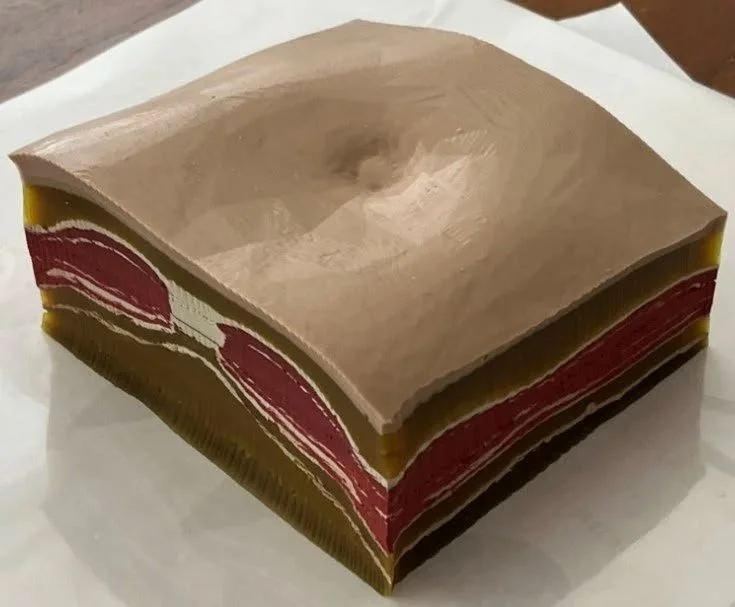
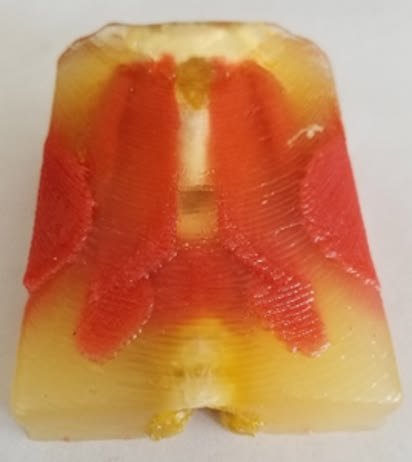
Abdominal wall models.
Multi-layer abdominal wall models with distinct tissue layers and consistent, repeatable mechanical fidelity for procedure training.
Further reading.
Need a model that feels real?
Share your imaging data or requirements — ALT will build the synthetic tissue or heterogeneous anatomical model you need.